
Beginner
Options Basics, Types, and Contracts
OIC
A beginner-friendly overview of calls, puts, option contracts, strike prices, expiration, pricing basics, and exercise styles.
Why we recommend it
Learn contract terminology in an audiovisual format.
Listen, watch and connect the ideas. Explanations of options fundamentals, Greeks and strategies from OIC and IBKR Campus.
Formats range from an introduction to an in-depth discussion. Choose by topic and prior knowledge. We link the supplied sources without embedded players; external services may have their own access conditions.
12 of 12 resources
Beginner
OIC
A beginner-friendly overview of calls, puts, option contracts, strike prices, expiration, pricing basics, and exercise styles.
Why we recommend it
Learn contract terminology in an audiovisual format.

Beginner
OIC
Introduces options terminology, calls and puts, expiration, exercise, assignment, and basic option pricing.
Why we recommend it
Connect terms across the lifecycle of an option.

Beginner–Intermediate
OIC
Explains how vertical spreads combine options to create defined-risk and defined-reward positions. (Options Education)
Why we recommend it
Move from a single option to a combination of contracts.

Intermediate
OIC
Shows how an ATM call and put can be combined to create a position designed around a large move in either direction. (Options Education)
Why we recommend it
Distinguish a movement view from a directional view.

Intermediate
OIC
Explains how a strangle differs from a straddle, including lower premium, wider break-even points, and Greek exposure. (Options Education)
Why we recommend it
Compare premium cost with the movement needed to reach break-even.

Beginner–Intermediate
OIC
Uses simple metaphors to explain Delta, Gamma, Theta, and the role Greeks play in option pricing. (Options Education)
Why we recommend it
Approach sensitivities before moving into the mathematics.

Advanced
OIC
Explains volatility skew, smile and smirk patterns, and how implied volatility varies across strikes. (Options Education)
Why we recommend it
Explore the volatility structure behind an options chain.

Advanced
OIC
Shows how the major Greeks interact inside condors, butterflies, and other multi-leg option positions. (Options Education)
Why we recommend it
Connect individual Greeks with the risk of a combined position.

Intermediate
IBKR Campus / OCC
Explores relationships between calls, puts, rates, dividends, synthetic stock, and the implied forward price hidden inside an options chain. (interactivebrokers.com)
Why we recommend it
Look for relationships between individual quotes.
Intermediate
IBKR Campus / OCC
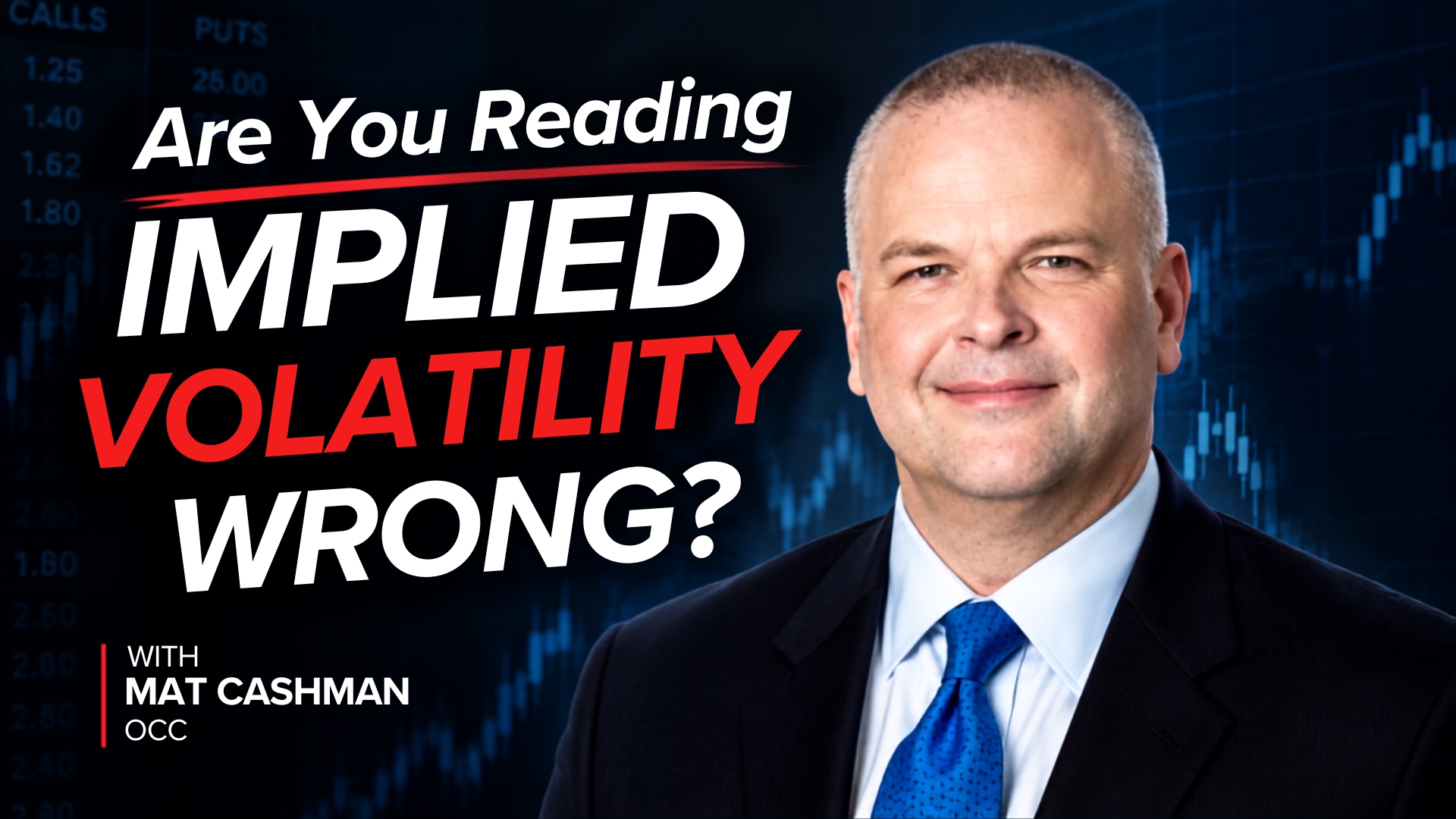
Explains why an IV number needs context and how implied and historical volatility can be compared more meaningfully. (interactivebrokers.com)
Why we recommend it
Avoid overinterpreting an isolated IV reading.

Intermediate
IBKR Campus
Discusses how open interest, volume, and implied volatility can be used together when interpreting options activity. (interactivebrokers.com)
Why we recommend it
Use several metrics together rather than elevating one signal.

Intermediate–Advanced
IBKR Campus
Breaks down calendar spreads through volatility, time decay, Vega, event risk, and assignment considerations. (interactivebrokers.com)
Why we recommend it
Connect expirations with the different risks of a spread.
Original titles are preserved. Summaries and editorial context are in English; the language, access and terms of external resources may differ. External links open a new tab.