Beginner
Understanding Options
Michael Sincere · 2014, 2nd ed.
A practical introduction to options, covering calls, puts, spreads, Greeks, and basic trading mechanics.
Why we recommend it
Start with contract mechanics before comparing strategies.
BeInOptions · Keep learning
Books, films, articles, videos and tools: the curated BeInOptions selection on options, volatility, risk and decision-making.
65 resources · 5 categories · From foundations to deeper study
01 / Explore
From your first options contracts to volatility and decisions under uncertainty: books for the next step in your learning.


Beginner
Michael Sincere · 2014, 2nd ed.
A practical introduction to options, covering calls, puts, spreads, Greeks, and basic trading mechanics.
Why we recommend it
Start with contract mechanics before comparing strategies.
Beginner–Intermediate
Brian Overby · 2024 edition
A strategy-focused guide with more than 40 options setups, including when to use them, risk, and payoff structure.
Why we recommend it
Connect strategy names with their risks and payoff shapes.
Intermediate
Lawrence G. McMillan · 2012, 5th ed.
A comprehensive reference on calls, puts, spreads, LEAPS, volatility, and position management.
Why we recommend it
Use it as a reference when a particular strategy needs a closer look.
Intermediate
Sheldon Natenberg · 2014, 2nd ed.
A widely used guide to option pricing, implied volatility, Greeks, strategy selection, and risk management.
Why we recommend it
Connect option valuation with the risk of the resulting position.
Intermediate
Dan Passarelli · 2012, 2nd ed.
Explains Delta, Gamma, Theta, Vega, and Rho and how they affect option prices and positions.
Why we recommend it
Separate the different sensitivities inside an options position.
Intermediate–Advanced
John C. Hull · 2021, 11th ed.
An academic foundation in derivatives, option pricing, futures, Black-Scholes-Merton models, and risk.
Why we recommend it
Explore the models behind practical derivatives applications.
Advanced
Euan Sinclair · 2013, 2nd ed.
Focuses on implied and realized volatility, option pricing, hedging, position sizing, and volatility risk premium.
Why we recommend it
Look beyond an IV quote to volatility exposure and position sizing.
Advanced
Euan Sinclair · 2020
A modern approach to option trading covering edge, volatility premium, term structure, earnings, and position construction.
Why we recommend it
Place individual positions within a systematic decision process.
Advanced / Quant
Jim Gatheral · 2006
Covers volatility smiles and surfaces, stochastic volatility, option pricing, and hedging from a quantitative perspective.
Why we recommend it
A next step after learning the foundations of volatility and pricing.
Advanced
Nassim Nicholas Taleb · 1997
A practical guide to hedging vanilla and exotic options, nonlinear risk, and derivatives portfolio management.
Why we recommend it
Study why portfolio risk changes as the market moves.
Intermediate
George Jabbour, Philip Budwick · 2010, 2nd ed.
Focuses on managing open positions using adjustments, hedges, Greeks, and advanced option combinations.
Why we recommend it
Extend strategy selection into the management of an open position.
Intermediate
Dennis A. Chen, Mark Sebastian · 2012
Presents options trading as a structured portfolio process with emphasis on risk control and systematic strategy management.
Why we recommend it
Shift attention from an individual trade to the overall portfolio.
Advanced
Jeff Augen · 2009
Explores option behavior near expiration, short-term pricing effects, and expiration-focused trading strategies.
Why we recommend it
Examine the distinctive risks of very short time to expiration.
All Levels
Nassim Nicholas Taleb · 2008 ed.
Examines randomness, luck versus skill, and common mistakes in evaluating risk and performance in financial markets.
Why we recommend it
Avoid treating a good outcome as proof of a good decision.
All Levels
Annie Duke · 2019
Explores decision-making under uncertainty and incomplete information, with strong relevance to trading and risk management.
Why we recommend it
Add a decision-making perspective to technical market knowledge.
02 / Explore
Market crises, incentives and decisions told through stories. This selection adds human and institutional context to technical knowledge.
Beginner
Film reference: TMDB · 2015
An accessible look at the housing bubble, mortgage-backed securities, short positions, and the 2008 financial crisis.
Why we recommend it
Use the story as an entry point into the links behind a financial crisis.
Beginner–Intermediate
Film reference: TMDB · 2011
Follows an investment bank during the first hours of a financial crisis and explores risk, leverage, and difficult decisions.
Why we recommend it
Consider how model risk and time pressure affect decisions.
Beginner
Film reference: TMDB · 2010
Explains the causes and consequences of the 2008 financial crisis through interviews with economists, executives, and policymakers.
Why we recommend it
Add institutional context to individual market stories.
Beginner–Intermediate
Film reference: TMDB · 2011
Dramatizes the government and banking response to the 2008 crisis and the collapse of major financial institutions.
Why we recommend it
Explore the connections that make financial risk systemic.
Beginner
Film reference: TMDB · 1987
A classic story about stockbroking, speculation, insider trading, ambition, and ethics in financial markets.
Why we recommend it
Use the story to question incentives and conflicts of interest.
Beginner–Intermediate
Film reference: TMDB · 1999
Based on the Nick Leeson story and useful for understanding unauthorized trading, derivatives risk, and failed risk controls.
Why we recommend it
See why independent risk controls matter.
Beginner
Film reference: TMDB · 2000
Explores aggressive brokerage sales, market manipulation, conflicts of interest, and unethical financial practices.
Why we recommend it
Recognise sales pressure and problematic incentives.
Beginner–Intermediate
Film reference: TMDB · 2005
Examines the collapse of Enron and the role of accounting manipulation, incentives, corporate culture, and governance.
Why we recommend it
Connect financial reporting with corporate governance.
Intermediate
Film reference: TMDB · 2017
Investigates fraud involving Chinese companies listed on U.S. markets and highlights due diligence and information risk.
Why we recommend it
Consider the quality of information behind an investment narrative.
Intermediate
Film reference: TMDB · 2016
Follows a major short-selling campaign and raises questions about research, conviction, incentives, and activist investing.
Why we recommend it
Distinguish the arguments from the interests of the parties involved.
All Levels
Film reference: TMDB · 2017
A profile of Warren Buffett focused on investing philosophy, long-term thinking, decision-making, and personal discipline.
Why we recommend it
Add a long-term perspective alongside short-term market moves.
Beginner–Intermediate
Film reference: TMDB · 2016
A financial drama centered on investment banking, IPOs, information asymmetry, compliance, and conflicts of interest.
Why we recommend it
Reflect on unequal information and competing incentives.
Beginner
Film reference: TMDB · 2022
Explores the GameStop phenomenon, retail investors, short interest, online communities, and market dynamics.
Why we recommend it
Explore the interaction between market positions and online communities.
Beginner–Intermediate
Film reference: TMDB · 2010
A financial drama set around the 2008 crisis, exploring Wall Street culture, market risk, ambition, and the consequences of financial decisions.
Why we recommend it
Use the narrative to discuss risk and responsibility.
Intermediate
Film reference: TMDB · 2018
Revisits the 2008 crisis through interviews with key participants involved in the government and financial-system response.
Why we recommend it
Complement dramatised accounts with participants’ perspectives.
03 / Explore
Read into a specific question: contract basics, volatility and market structure from OIC, regulators and other market institutions.
Beginner
Options Industry Council (OIC)
A clear introduction to calls, puts, strike prices, premiums, expiration, and the basic rights and obligations of option contracts. (Options Education)
Why we recommend it
Contract fundamentals provide a foundation for the other resources.
Beginner–Intermediate
OIC
Explains why an option can lose value even when the underlying moves in the expected direction, with a focus on implied volatility around earnings. (Options Education)
Why we recommend it
Separate a correct directional view from an options position’s result.
Intermediate
OIC
Introduces implied volatility, volatility skew, VIX, and how volatility can differ across strikes and expirations. (prd-web.optionseducation.org)
Why we recommend it
Put an individual IV reading into context.
Intermediate
OIC
Connects implied volatility with expected price movement, standard deviations, tail risk, and the Rule of 16. (Options Education)
Why we recommend it
Consider simplified movement estimates alongside their limitations.
Intermediate
OIC
Covers option pricing, Greeks, index options, volatility, Black-Scholes concepts, and strategy construction. (Options Education)
Why we recommend it
Bridge contract basics with valuation and strategy construction.
Beginner
FINRA
A regulatory-oriented explanation of calls, puts, premiums, leverage, assignment, risks, and the mechanics of standardized options. (FINRA)
Why we recommend it
Balance strategy knowledge with obligations and risks.
Beginner
Investor.gov / SEC
An official investor bulletin covering listed options, underlying assets, basic mechanics, and important risks. Updated in 2026. (Investor)
Why we recommend it
Start with investor information before exploring complex strategies.
Beginner
Fidelity Learning Center
A broad beginner learning path covering pricing, calls, puts, strike selection, expiration, position sizing, and common mistakes. (fidelity.com)
Why we recommend it
Connect several beginner topics within one learning path.
Beginner–Intermediate
Fidelity Viewpoints
Explains how ETFs can use options for income, downside protection, lower volatility, and defined portfolio outcomes. (fidelity.com)
Why we recommend it
Recognise option mechanics inside fund products.
Intermediate
Cboe
Introduces protective puts, collars, and index options as tools for managing portfolio downside risk during volatile markets. (cboe.com)
Why we recommend it
Compare hedging approaches alongside return objectives.
Intermediate–Advanced
Cboe
Examines options strategies around scheduled catalysts such as inflation data, jobs reports, and central-bank decisions, including straddles and spreads. (cboe.com)
Why we recommend it
Connect scheduled events with the risks of an options structure.
Intermediate
Cboe
A current snapshot of options-market activity, including index and ETF options, retail participation, 0DTE growth, FLEX options, and overall volume trends. (cboe.com)
Why we recommend it
Read it as dated market context rather than a timeless trading rule.
Advanced
Cboe
Examines the rapid growth of zero-days-to-expiration SPX options and their potential impact on volatility and market-maker hedging. (cboe.com)
Why we recommend it
Explore the market mechanics behind very short expirations.
Beginner–Intermediate
IBKR Campus
A concise reference on implied volatility, option pricing, Vega, historical comparisons, and volatility-based strategies. (interactivebrokers.com)
Why we recommend it
A reference to revisit when an IV concept needs clarification.
Beginner–Intermediate
Fidelity / OCC
Covers pricing, exercise and assignment, liquidity, and other common options questions in an educational webinar format. (fidelity.com)
Why we recommend it
Connect pricing questions with the practical lifecycle of a contract.
04 / Explore
Listen, watch and connect the ideas. Explanations of options fundamentals, Greeks and strategies from OIC and IBKR Campus.




Beginner
OIC
A beginner-friendly overview of calls, puts, option contracts, strike prices, expiration, pricing basics, and exercise styles.
Why we recommend it
Learn contract terminology in an audiovisual format.
Beginner
OIC
Introduces options terminology, calls and puts, expiration, exercise, assignment, and basic option pricing.
Why we recommend it
Connect terms across the lifecycle of an option.
Beginner–Intermediate
OIC
Explains how vertical spreads combine options to create defined-risk and defined-reward positions. (Options Education)
Why we recommend it
Move from a single option to a combination of contracts.
Intermediate
OIC
Shows how an ATM call and put can be combined to create a position designed around a large move in either direction. (Options Education)
Why we recommend it
Distinguish a movement view from a directional view.
Intermediate
OIC
Explains how a strangle differs from a straddle, including lower premium, wider break-even points, and Greek exposure. (Options Education)
Why we recommend it
Compare premium cost with the movement needed to reach break-even.
Beginner–Intermediate
OIC
Uses simple metaphors to explain Delta, Gamma, Theta, and the role Greeks play in option pricing. (Options Education)
Why we recommend it
Approach sensitivities before moving into the mathematics.
Advanced
OIC
Explains volatility skew, smile and smirk patterns, and how implied volatility varies across strikes. (Options Education)
Why we recommend it
Explore the volatility structure behind an options chain.
Advanced
OIC
Shows how the major Greeks interact inside condors, butterflies, and other multi-leg option positions. (Options Education)
Why we recommend it
Connect individual Greeks with the risk of a combined position.
Intermediate
IBKR Campus / OCC
Explores relationships between calls, puts, rates, dividends, synthetic stock, and the implied forward price hidden inside an options chain. (interactivebrokers.com)
Why we recommend it
Look for relationships between individual quotes.
Intermediate
IBKR Campus / OCC
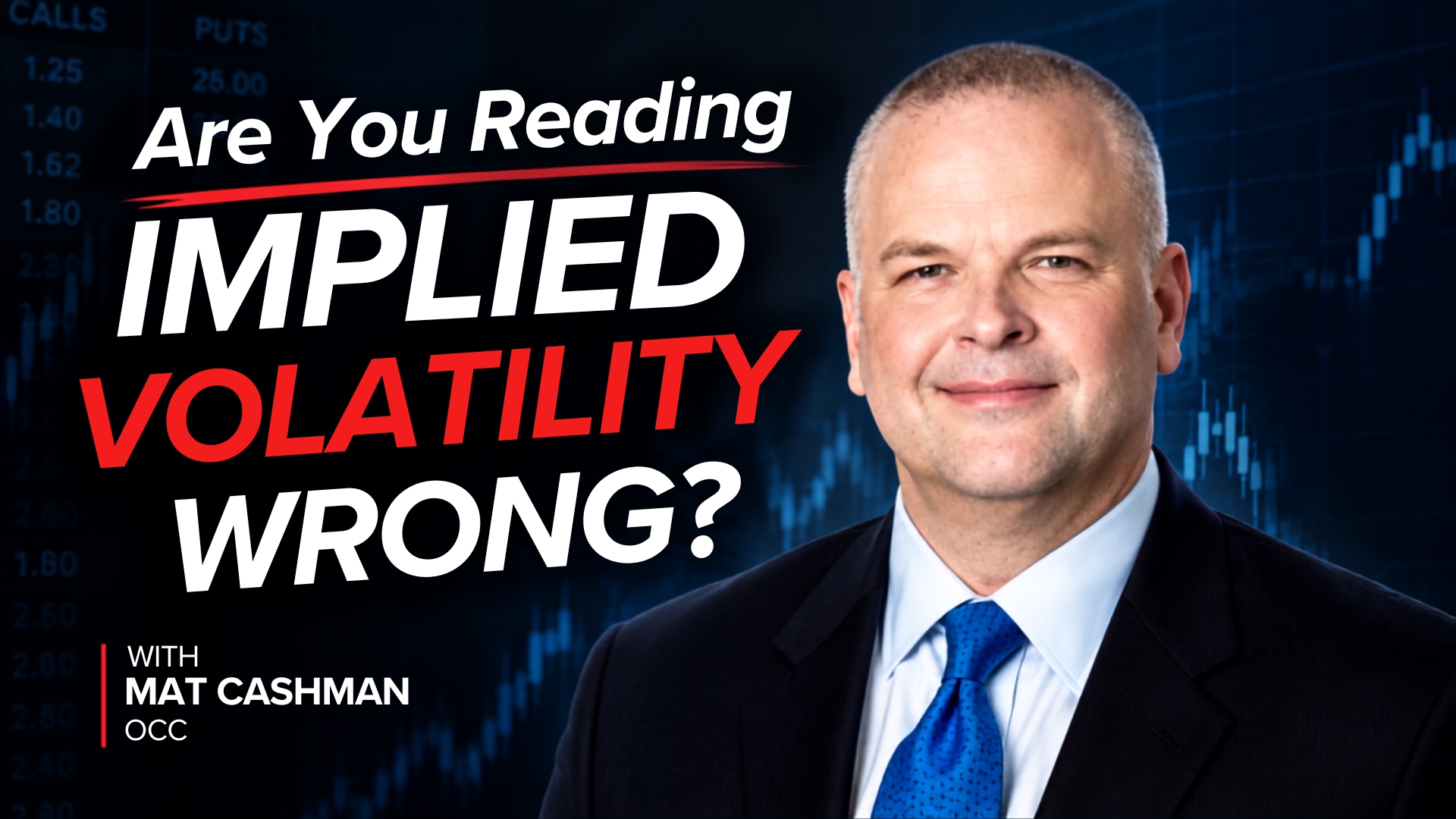
Explains why an IV number needs context and how implied and historical volatility can be compared more meaningfully. (interactivebrokers.com)
Why we recommend it
Avoid overinterpreting an isolated IV reading.
Intermediate
IBKR Campus
Discusses how open interest, volume, and implied volatility can be used together when interpreting options activity. (interactivebrokers.com)
Why we recommend it
Use several metrics together rather than elevating one signal.
Intermediate–Advanced
IBKR Campus
Breaks down calendar spreads through volatility, time decay, Vega, event risk, and assignment considerations. (interactivebrokers.com)
Why we recommend it
Connect expirations with the different risks of a spread.
05 / Explore
Change assumptions and understand their effect: external calculators, scenario analysis and market overviews to complement the theory.
Cboe Options Institute
Illustrative diagram
Cboe Options Institute
Illustrative diagram
Options Industry Council
Illustrative diagram
Options Industry Council
Illustrative diagram
Interactive Brokers
Illustrative diagram
Beginner–Intermediate
Cboe Options Institute
Calculates theoretical option prices and Greeks using customizable inputs such as strike, volatility, interest rate, and expiration.
Why we recommend it
Compare how individual model assumptions affect a price.
Intermediate
Cboe Options Institute
Helps explore option strategies based on a target price and date and compares potential outcomes such as return on investment.
Why we recommend it
Compare assumptions with hypothetical outcomes.
Beginner–Intermediate
Options Industry Council
Simulates theoretical option values and Greeks for stocks, ETFs, and indexes with adjustable strikes, expirations, and volatility.
Why we recommend it
Connect the pricing inputs from the basics with model values.
Beginner–Intermediate
Options Industry Council
Visualizes hypothetical profit and loss across different underlying prices and helps users understand strategy payoff behavior.
Why we recommend it
Distinguish a market view from a strategy’s payoff shape.
Intermediate
Options Industry Council
Explores statistical probability scenarios for option positions and helps connect price ranges with potential outcomes.
Why we recommend it
Treat probabilities as estimates that depend on model assumptions.
Intermediate
Options Industry Council
Displays option quotes together with Delta, IV, bid-ask spreads, volume, and different expirations.
Why we recommend it
Compare the metrics encountered when reading an options chain.
Intermediate
Options Industry Council
Tracks metrics such as option volume, implied volatility, historical volatility, and activity across U.S.-listed stocks and indexes.
Why we recommend it
Connect volatility measures with market activity.
Intermediate
Interactive Brokers
Compares market-implied probability distributions with a user's own assumptions and visualizes potential strategy outcomes.
Why we recommend it
See how personal assumptions change a scenario.
Still finding your way around calls, puts or option prices? Our own guides help put the external resources in context. This selection is educational, not an investment recommendation.
Understand options basics