What You’ll Learn
- What the strike price means in an option
- Why an option has a fixed strike
- How the strike and market price relate
- What the strike changes for a Call and a Put
- Why “in the money” does not automatically mean a net profit
Key Takeaways
- The strike price is the fixed price written into an options contract.
- The market price is the current, changing price of the underlying asset.
- A Call gives the right to buy at the strike; a Put gives the right to sell at the strike.
- A market price above or below the strike affects Calls and Puts differently.
- “In the money” does not automatically mean a profit remains after the premium and costs.
Imagine this

You spot a teddy bear in a toy shop. It costs €10 today, but you do not have your money with you.
The shopkeeper gives you a special voucher. It says: “You can buy this teddy bear later for €10.” The price printed on your voucher stays the same.
The next day, the teddy bear costs €12 in the shop. With your voucher, you could still buy it for €10. That could be useful.
If the teddy bear costs only €8 the next day, you probably would not use your voucher. You could simply buy it in the shop for €8.
The voucher gives you a choice. The €10 written on it is the fixed price for that choice.
An option also has a fixed price like this. It is called the:
STRIKE PRICE
What is a strike price? (The simple version)
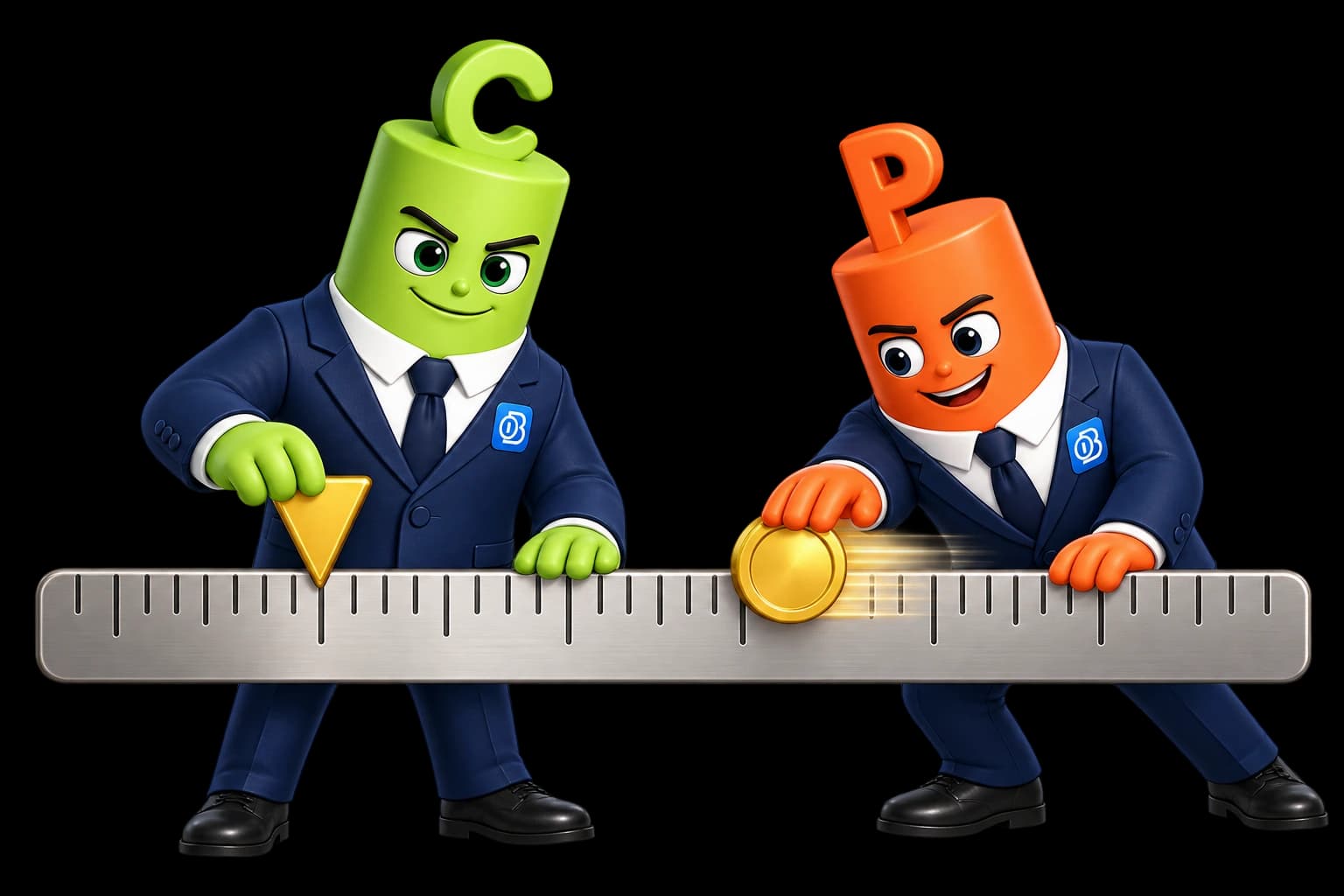
The strike price is the price at which an option allows its buyer to buy or sell a particular underlying asset.
An underlying asset is what the option is based on, such as a share. The strike is part of the options contract from the start. It does not automatically change when the share price moves.
Strike price
fixed price in the contract
Market price
current price in the market
So the strike is not a prediction, and it is not a price that changes with every market move. It is a fixed rule in the option.
Why does an option have a strike price?
An option is a contract with clear rules. One of those rules says at what price the underlying asset can be bought or sold. Without that price, the option would not say what it allows.
Options on the same underlying asset can have different strike prices. A share might trade at €50 while options are available with strikes of €45, €50, or €55.
Each strike belongs to a separate options contract with its own terms. Once your option is set, its strike does not automatically adjust just because the share price moves.
Instead, the distance between the fixed strike and the current market price changes. That is the comparison we will make next.
How does the strike price relate to the market price?
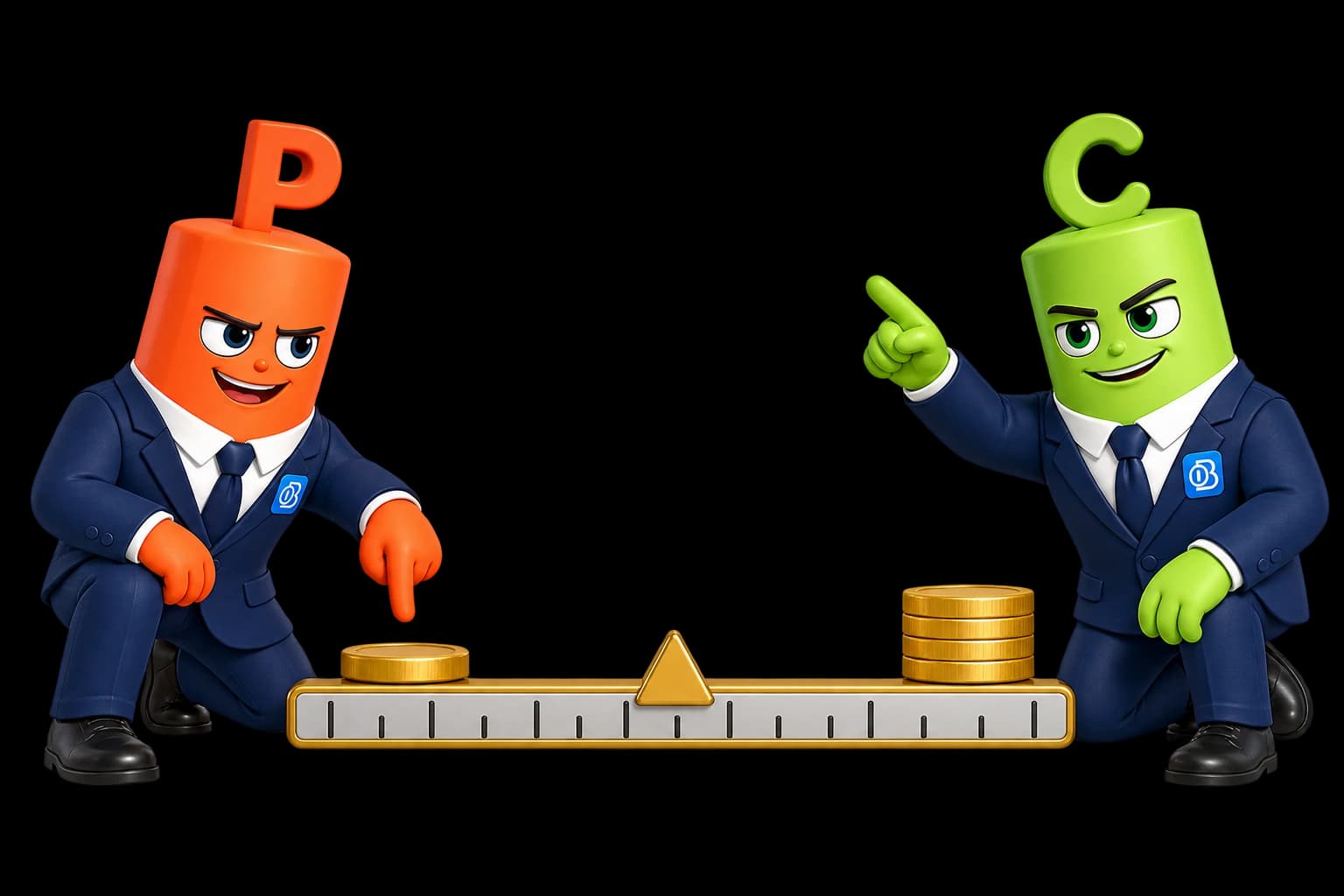
Compare the strike with the current market price. This helps you see whether the option’s buy or sell rule would have a simple mathematical advantage.
Market price above strike
When the market price is above the strike, the market price is higher than the fixed contract price.
Market price below strike
When the market price is below the strike, the market price is lower than the fixed contract price.
Market price equals strike
When both prices are equal, the market price is exactly at the strike.
What that gap means depends on whether you are looking at a Call or a Put. At expiration, a Call has a simple exercise value when the market price is above the strike. For a Put, the reverse is true when the market price is below the strike. Other factors can affect the price of an option that still has time left.
Why does the strike matter for Calls and Puts?
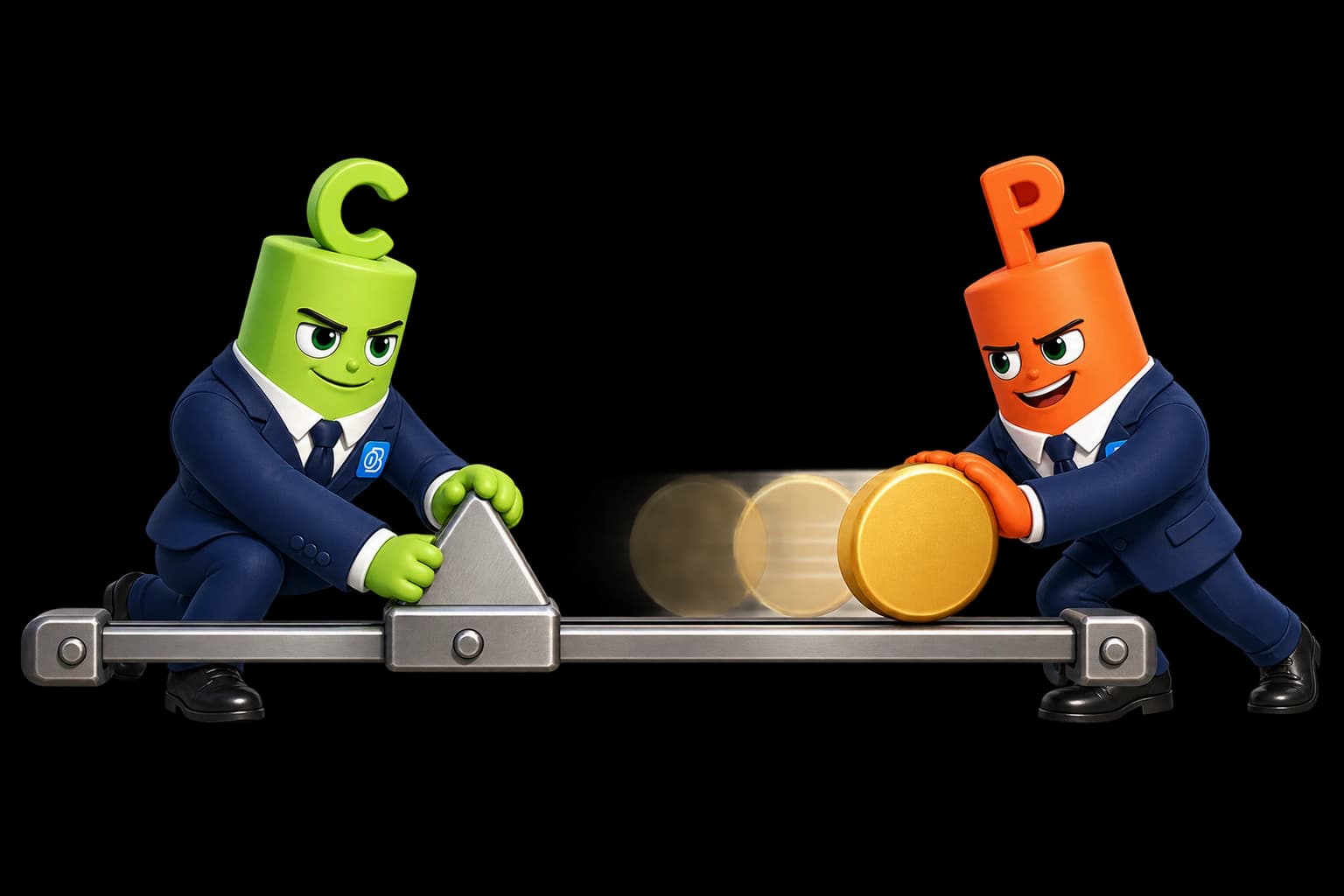
A Call and a Put give different rights. That is why the same strike does not mean the same thing for both.
A Call: the right to buy at the strike
A purchased Call gives you the right to buy the underlying asset at the strike price. If the market price is above the strike, buying at the lower strike may be advantageous.
With a €10 strike and a €12 market price, the Call lets you buy for €10 even though the asset costs €12 in the market.
A Put: the right to sell at the strike
A purchased Put gives you the right to sell the underlying asset at the strike price. If the market price is below the strike, selling at the higher strike may be advantageous.
With a €10 strike and an €8 market price, the Put lets you sell for €10 even though the asset costs €8 in the market.
You do not have to use an option you bought. Whether and how an option is exercised or settled also depends on the contract terms.
For a closer look at the difference between the two option types, read our guide to Calls and Puts.
A simple example using the same strike
Imagine a fictional share is worth €12 at expiration in one case and €8 in another. We will compare both cases with a €10 strike.
Case A: The market price is €12
The Call with a €10 strike lets you buy for €10 even though the share costs €12 in the market.
The Put with a €10 strike lets you sell for €10. In this simplified comparison, that is no better than selling at the €12 market price.
Case B: The market price is €8
The Call with a €10 strike lets you buy for €10. In this simplified comparison, that is no better than buying at the €8 market price.
The Put with a €10 strike lets you sell for €10 even though the share costs €8 in the market.
The strike stays at €10 in both cases. Only the market price changes. This comparison explains why Calls and Puts respond differently to the gap.
These figures are only an illustration of the strike. They do not include the option premium or any other possible costs. A simple exercise value is therefore not automatically a net profit.
Common misunderstandings about the strike
“The strike is the current share price.”
No. The strike is written into the contract. The market price shows what the underlying asset currently costs in the market. The two prices can happen to be equal, but they do not have to be.
“The strike is the price of the option.”
No. The price you pay for an option is called the premium. The strike is the fixed buy or sell price for the underlying asset.
“A strike above the market price is always good.”
That depends on whether you are looking at a Call or a Put. A higher strike does not have the same effect on both.
“If an option is in the money, I have made a profit.”
Not necessarily. “In the money” describes the comparison between strike and market price. You also need to account for the premium and possible costs to work out a net result.
“The strike is a price target.”
No. It does not predict where the market will go. It is one of the terms of the options contract.
The most important rule
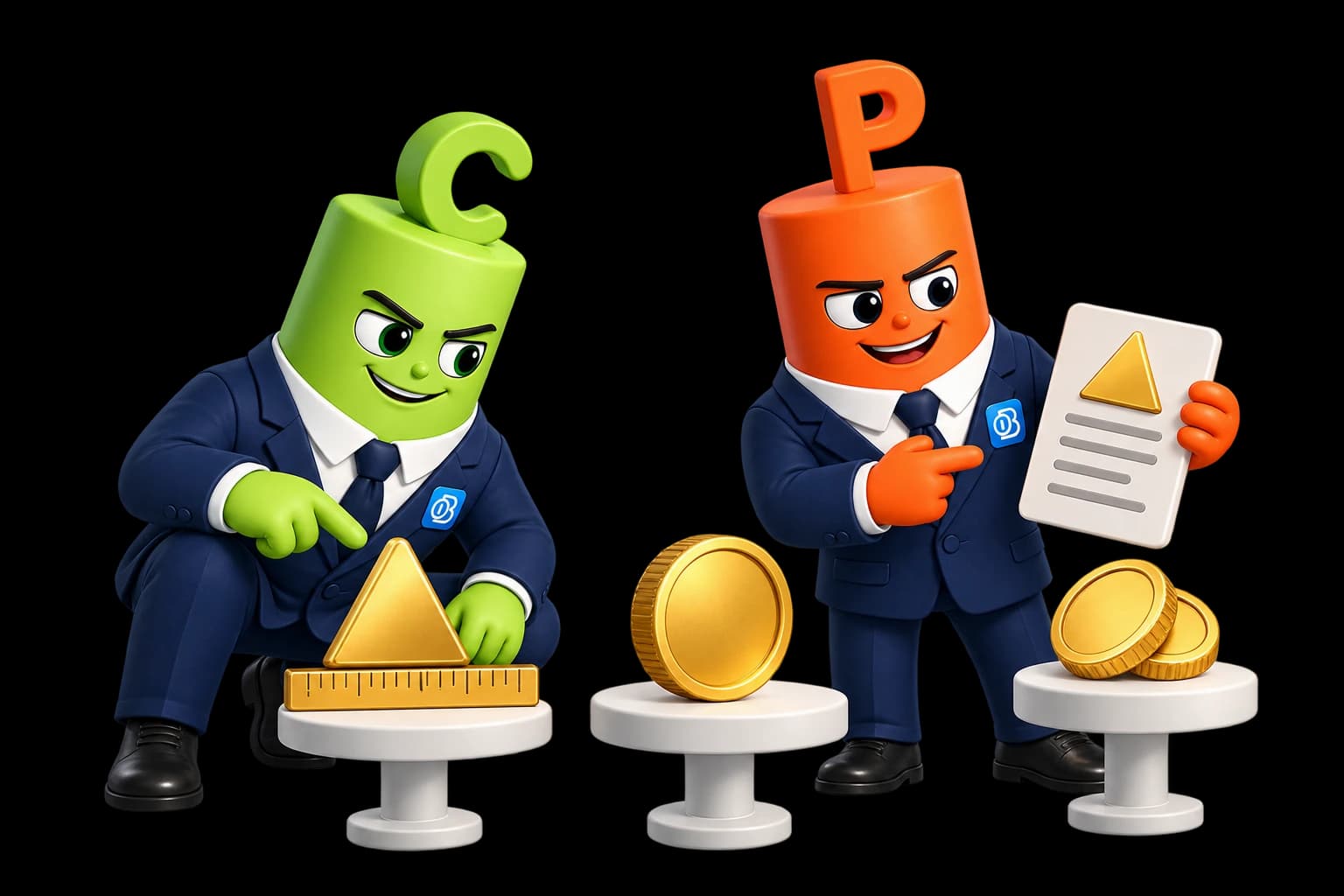
Always read the strike together with the type of option:
Call: the right to buy at the strike
Put: the right to sell at the strike
Then compare the strike with the market price. The strike alone does not predict where the market will move or whether a trade will be profitable.
Glossary
- Strike price
- The price written into the options contract at which the underlying asset can be bought or sold.
- Underlying asset
- The asset an option is based on, such as a share.
- Market price
- The current price at which the underlying asset is trading in the market.
- Premium
- The price a buyer pays for the option.
- Expiration
- The end of the period during which the option is valid. The contract sets the exact expiration and exercise rules.
- In the money
- A simple description of a Call or Put whose strike-versus-market-price comparison gives it exercise value. By itself, this says nothing about net profit.
One-sentence summary
The strike price is the fixed price in an options contract at which a Call allows a purchase and a Put allows a sale of the underlying asset.
BeInOptions Academy
Learn strike prices step by step
You now know the fixed price in an options contract.
Continue with the options, Calls, and Puts basics in the BeInOptions Academy.
Continue learning in the Academy